
Best Laptop for Video Editing (2026): Editing Laptop Reviews
Updated
With 32GB of RAM and an RTX graphics name on every listing, this guide's top pick is the Dell Precision 7780 Mobile Workstation: it has the most stated graphics memory in the list (12GB) and 2TB of storage, on a 17.3-inch screen. The laptops here are compared on the details each seller states, not on measured performance, and the picks are ranked by RAM, graphics memory, storage, and pool order.
- 100laptops compared in this guide's pool
- 10picks ranked in this guide
- 3of 10 picks have a dedicated GPU
- Nov 2prices last read, 2026
How the picks were chosen
This guide covers 10 laptops whose listings name an RTX card and state at least 32GB of RAM, with at most 2 picks per brand. They are ranked by stated RAM, then graphics memory, then storage, then pool order. Every comparison relies on the details each seller states and on live prices; this guide does not guess at performance, battery life, or program compatibility.
How the spec score works
The spec score runs from 7.0 to 9.5. For each laptop it compares up to 5 listed specifications with the best value among the picks in this guide: GPU memory, RAM, refresh rate and storage (more is better) and weight (lighter is better). Each comparison is the pick's value divided by the best value, weighted 3, 2, 2, 1 and 1 in that order, and the weighted average (0 to 1) is placed on the scale: 7.0 plus 2.5 times the average, rounded to one decimal. Every pick already made this guide, so the scale starts at 7.0, and no pick gets 10: the score compares the picks with each other, not with a perfect laptop. A specification a listing does not state is left out and the rest are re-weighted; with fewer than 2 stated, no score is shown. This score is not influenced by any manufacturer or sales agent website.
Compare 10 laptops for video editing: RTX graphics, 32GB RAM, on stated specs and live prices.
The Winners & Full Reviews of Each Laptop
#1. Dell Precision 7780 Mobile Workstation 17.3" FHD - 12GB graphics memory and 2TB storage
$2,699.99 (as of 11/01/2026 20:22 PST - Details)
Winner: #1 out of 10
12GB graphics memory and 2TB storage
12GB graphics memory and 2TB storage
- 12GB of graphics memory, most in this list
- 2TB of storage for footage and projects
- 17.3-inch screen for a wide timeline
- Windows 11 Pro
- Storage figure combines parts (512GB plus 2TB), read the listing
- Weight not stated by the seller
- Refresh rate not stated
- CPU
- Intel Core i9-13950HX
- GPU
- RTX 4000 Ada
- GPU memory
- 12 GB
- RAM
- 32 GB
- Storage
- 2000 GB
- Screen
- 17.3 in
- OS
- Windows 11 Pro
Ranks first because it has the most stated graphics memory in this list (12GB) and 2TB of storage, with 32GB of RAM. Its 17.3-inch screen gives a long timeline more room than the smaller picks below. No other pick here states more than 8GB of graphics memory.
Who it suits
- Editors working with 4K footage who want the most graphics memory in this list
- Users who want a large 17.3-inch screen and Windows 11 Pro
Skip it if
- You need a laptop with a stated weight for travel
- You prefer a smaller, lighter machine for editing on the move
Verdict: The Dell Precision 7780 leads this list on graphics memory and storage, making it a strong pick for heavy editing work.
#2. HP Omen RTX 5070 AMD Ryzen 9 8940HX 240Hz Gaming Laptop | 16" WQXGA IPS - 8GB graphics memory and 2TB storage
$2,399.00 (as of 11/01/2026 20:24 PST - Details)
#2 out of 10
8GB graphics memory and 2TB storage
8GB graphics memory and 2TB storage
- 8GB of graphics memory stated
- 2TB SSD for footage
- 240Hz refresh rate
- 16-inch screen
- Heaviest stated weight in this list (2.45kg)
- Graphics memory is 8GB, below the Dell's 12GB
- CPU
- AMD Ryzen 9 8940HX
- GPU
- RTX 5070
- GPU memory
- 8 GB
- RAM
- 32 GB
- Storage
- 2000 GB
- Screen
- 16 in
- Refresh
- 240 Hz
- Weight
- 2.45 kg
- OS
- Windows 11 Home
Ranks second because it has 8GB of stated graphics memory and 2TB storage, after the Dell's 12GB. Its 240Hz display and 16-inch screen make it a close competitor for timeline work.
Who it suits
- Editors who want a high refresh display while reviewing clips
- Users who need 2TB of internal storage for project files
Skip it if
- You want the lightest laptop in this list
- You prefer a workstation-class graphics name over a GeForce name
Verdict: The HP Omen balances 8GB graphics memory and 2TB storage with a 240Hz screen for timeline work.
#3. Lenovo LOQ Gaming Laptop - 6GB graphics memory, 144Hz screen
$1,399.99 (as of 11/01/2026 20:25 PST - Details)
#3 out of 10
6GB graphics memory, 144Hz screen
6GB graphics memory, 144Hz screen
- 6GB of graphics memory stated
- 144Hz refresh rate
- 1TB SSD
- Windows 11 Home
- Storage is 1TB, smallest of the three leading picks
- Graphics memory is lower than the HP's 8GB
- Weight 2.38kg is not the lightest
- CPU
- AMD Ryzen 5 7235HS
- GPU
- GeForce RTX 4050
- GPU memory
- 6 GB
- RAM
- 32 GB
- Storage
- 1000 GB
- Screen
- 15.6 in
- Refresh
- 144 Hz
- Weight
- 2.38 kg
- OS
- Windows 11 Home
Ranks third with 6GB of stated graphics memory, after the 8GB and 12GB picks. It has 1TB storage and a 15.6-inch screen, placing it ahead of the no-vram group.
Who it suits
- Editors who want a stated graphics memory figure without needing the highest storage
- Users who want a 15.6-inch screen and a 144Hz display for fast review
Skip it if
- You need more than 1TB of internal storage
- You want a larger screen for a longer timeline
Verdict: The Lenovo LOQ offers a solid balance of graphics memory and screen for editing work.
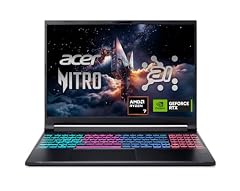
#4. Acer Nitro V 16" WUXGA 165Hz Gaming Laptop - 2TB storage, no graphics memory stated
$2,079.95 (as of 11/01/2026 20:20 PST - Details)
#4 out of 10
2TB storage, no graphics memory stated
2TB storage, no graphics memory stated
- 2TB storage for footage
- 165Hz refresh rate
- 16-inch screen
- 32GB RAM
- Graphics memory not stated by the seller
- Weight 2.1kg is not the lightest (ASUS G16 is 1.76kg)
- CPU
- Intel Core 7 240H
- GPU
- GeForce RTX 5060
- RAM
- 32 GB
- Storage
- 2000 GB
- Screen
- 16 in
- Refresh
- 165 Hz
- Weight
- 2.1 kg
- OS
- Windows 11
Ranks fourth because it has the most storage (2TB) among picks without a stated graphics memory figure. Its 165Hz refresh and 16-inch screen add to the editing experience.
Who it suits
- Editors who need large internal storage for raw footage
- Users who want a 165Hz display without needing a stated graphics memory figure
Skip it if
- You want a known graphics memory amount for GPU-heavy effects
- You prefer a lighter laptop for travel
Verdict: The Acer Nitro V 16 offers the most storage among picks without a stated graphics memory, at 2TB.
#5. ASUS ROG Strix G18 - 18-inch screen, 144Hz, 1TB storage
$2,750.00 (as of 11/01/2026 20:21 PST - Details)
#5 out of 10
18-inch screen, 144Hz, 1TB storage
18-inch screen, 144Hz, 1TB storage
- 18-inch screen, largest in this list
- 144Hz refresh rate
- 1TB SSD
- GeForce RTX 5070
- Graphics memory not stated
- Weight not stated by the seller
- Storage is 1TB, lower than the 2TB picks
- CPU
- Intel Core i9
- GPU
- GeForce RTX 5070
- RAM
- 32 GB
- Storage
- 1000 GB
- Screen
- 18 in
- Refresh
- 144 Hz
- OS
- Windows 11 Home
Ranks fifth with 1TB storage, no graphics memory stated, but it has the largest screen in this list at 18 inches and a 144Hz refresh. It sits ahead of the other 1TB no-vram picks due to pool order.
Who it suits
- Editors who want the largest screen in this list for a wide timeline
- Users who prefer a 144Hz display for clip review
Skip it if
- You need a stated weight for travel
- You want a smaller, lighter laptop for portability
Verdict: The ASUS ROG Strix G18 brings the biggest screen in this list with 1TB storage and a 144Hz panel.
#6. GIGABYTE Gaming A16 - 165Hz refresh and 1TB storage
$1,628.00 (as of 11/01/2026 20:23 PST - Details)
#6 out of 10
165Hz refresh and 1TB storage
165Hz refresh and 1TB storage
- 165Hz refresh rate
- 1TB SSD
- 16-inch screen
- GeForce RTX 5070
- Graphics memory not stated
- Weight 2.2kg is not the lightest
- CPU
- Intel Core i7-13620H
- GPU
- GeForce RTX 5070
- RAM
- 32 GB
- Storage
- 1000 GB
- Screen
- 16 in
- Refresh
- 165 Hz
- Weight
- 2.2 kg
- OS
- Windows 11 Home
Ranks sixth with 1TB storage, no graphics memory stated, and a 165Hz refresh. It follows the ASUS G18 in pool order and offers a 16-inch screen.
Who it suits
- Editors who want a high refresh display on a 16-inch screen
- Users who need 1TB of storage for projects
Skip it if
- You want a stated graphics memory figure
- You need more storage without an external drive
Verdict: The GIGABYTE Gaming A16 offers a 165Hz screen and 1TB storage for editing workflows.
#7. msi Katana 15 HX 15.6” 165Hz QHD+ Gaming Laptop - 15.6-inch screen, 165Hz, 1TB
$2,158.09 (as of 11/01/2026 20:27 PST - Details)
#7 out of 10
15.6-inch screen, 165Hz, 1TB
15.6-inch screen, 165Hz, 1TB
- 165Hz refresh rate
- 1TB SSD
- GeForce RTX 5070
- 15.6-inch screen
- Graphics memory not stated
- Weight 2.25kg
- CPU
- Intel Core i9-14900HX
- GPU
- GeForce RTX 5070
- RAM
- 32 GB
- Storage
- 1000 GB
- Screen
- 15.6 in
- Refresh
- 165 Hz
- Weight
- 2.25 kg
- OS
- Windows 11 Home
Ranks seventh with the same 1TB storage and no stated graphics memory. Its 15.6-inch screen and 165Hz refresh place it after the GIGABYTE in pool order.
Who it suits
- Editors who prefer a 15.6-inch screen for portability
- Users who want a high refresh rate for clip review
Skip it if
- You want a larger screen
- You need a stated graphics memory amount
Verdict: The MSI Katana 15 HX pairs a 15.6-inch panel with a 165Hz refresh and 1TB storage.
#8. MECHREVO Aurora 16X Gaming Laptop - 16-inch 180Hz screen, 1TB storage
$1,599.99 (as of 11/01/2026 20:26 PST - Details)
#8 out of 10
16-inch 180Hz screen, 1TB storage
16-inch 180Hz screen, 1TB storage
- 180Hz refresh rate
- 1TB SSD
- 16-inch screen
- GeForce RTX 5060
- Graphics memory not stated
- Weight 2.35kg
- CPU
- Intel Core i7-14650HX
- GPU
- GeForce RTX 5060
- RAM
- 32 GB
- Storage
- 1000 GB
- Screen
- 16 in
- Refresh
- 180 Hz
- Weight
- 2.35 kg
- OS
- Windows 11 Home
Ranks eighth with 1TB storage, no graphics memory stated, and a 180Hz refresh. It comes after the MSI Katana in pool order and offers a 16-inch screen.
Who it suits
- Editors who want a very high refresh display on a 16-inch screen
- Users who need 1TB storage for footage
Skip it if
- You prefer a known graphics memory figure
- You want a lighter laptop for travel
Verdict: The MECHREVO Aurora 16X offers a 180Hz screen and 1TB storage in a 16-inch body.
#9. Acer Nitro V 16S AI Gaming Laptop - 16-inch 180Hz, 1TB, RTX 5060
$1,399.99 (as of 11/01/2026 20:20 PST - Details)
#9 out of 10
16-inch 180Hz, 1TB, RTX 5060
16-inch 180Hz, 1TB, RTX 5060
- 180Hz refresh rate
- 1TB SSD
- 16-inch screen
- AMD Ryzen 7 260
- Graphics memory not stated
- Weight 2.1kg
- CPU
- AMD Ryzen 7 260
- GPU
- GeForce RTX 5060 Laptop
- RAM
- 32 GB
- Storage
- 1000 GB
- Screen
- 16 in
- Refresh
- 180 Hz
- Weight
- 2.1 kg
Ranks ninth with 1TB storage and no stated graphics memory, but it has a 180Hz refresh and a 16-inch screen. It sits after the MECHREVO in pool order.
Who it suits
- Editors who want a high refresh rate and a 16-inch screen
- Users who prefer an AMD processor
Skip it if
- You want a stated graphics memory figure
- You need more storage
Verdict: The Acer Nitro V 16S AI brings a 180Hz display and 1TB storage with an AMD processor.
#10. ASUS ROG Strix G16 - Lightest weight, RTX 5080, no storage stated
$3,899.99 (as of 11/01/2026 20:21 PST - Details)
#10 out of 10
Lightest weight, RTX 5080, no storage stated
Lightest weight, RTX 5080, no storage stated
- 1.76kg weight, lightest in this list
- GeForce RTX 5080 graphics
- 16-inch screen
- 300Hz refresh rate
- Storage not stated by the seller
- Graphics memory not stated
- Screen is 16 inches, not the largest
- CPU
- Intel Core Ultra 9 290HX
- GPU
- GeForce RTX 5080
- RAM
- 32 GB
- Screen
- 16 in
- Refresh
- 300 Hz
- Weight
- 1.76 kg
- OS
- Windows 11 Home
Ranks last because it has no stated storage and no graphics memory, but it has the lightest stated weight (1.76kg) and an RTX 5080 graphics name. Its 300Hz refresh is the highest in this list.
Who it suits
- Editors who travel and want the lightest laptop here
- Users who prioritize a very high refresh display (300Hz)
Skip it if
- You need a known storage capacity
- You want a larger screen for a longer timeline
Verdict: The ASUS ROG Strix G16 is the lightest pick in this list with an RTX 5080, though storage is not stated.





Who this page is for and how to read it
This page is for people choosing a laptop to cut video on: a channel editor, a student with a first editing course, a freelancer who takes event footage home, or a studio buying a second machine for travel. The picks above are compared only on what each listing states (RAM, graphics name, graphics memory, storage, screen size, weight) and on live prices.
Every pick on this page names RTX graphics and states 32GB of RAM or more, inside a price window from the low thousands to just under $4,000. Priced listings that match that rule right now: 100. Median price of those listings: $2,419.
Read the cards first if you already know the spec line you want. Read the sections below if you do not, because they explain each spec field, what a listing usually leaves out, and which guide cuts the same catalogue another way.
Some readers need a different starting point. If your projects run long and heavy, the graphics memory floor guide starts from a stated graphics memory figure. If the laptop has to travel daily, the lighter editing machines start from weight. Each guide keeps its own rule, written at its top.
Nothing here measures how a laptop behaves with footage. The page reads spec sheets and prices, and tells you how to read them.
How the picks are chosen and ordered
The pillar pool is every listing that names an RTX graphics card, states at least 32GB of RAM and carries a live price in the window. From that pool, at most 2 picks come from one maker, so a single brand cannot fill the page.
Order follows 4 stated fields in turn. RAM comes first, then graphics memory, then storage, then the order of the pool. A listing that does not state a field sits after the listings that do, which is why a machine with an unstated graphics memory figure can land low even when its graphics name is recent.
What the order is not
It is not a speed ranking and not a verdict on any footage, program or workflow. Where 2 laptops share RAM and graphics memory, they are separated by storage alone, and that says nothing about how either one feels on a timeline.
Use the ranked list as a shortlist. Pick 2 or 3 cards whose spec line fits your projects, open each listing, and confirm the exact configuration before you compare prices. The spec sheet basics page covers where each field sits on a product page.
The Spec score on the cards
Each card carries a Spec score. It compares only the picks shown here on the fields they state: RAM, storage, weight, and graphics memory or refresh rate where a listing states them. The best stated value among the picks is the reference, and a field a listing leaves out is left out of its score rather than counted as zero. A high score means a strong spec line on paper, not a better laptop for a given job.
If 2 picks tie on the fields you care about, compare the price for the exact configuration and the weight. Those 2 fields change the decision more often than a small score gap.
What the RTX and 32GB rule keeps, and what it leaves out
The rule is short: the listing must name RTX graphics, state 32GB of RAM or more, and sit in the price window. Everything else, from screen size to processor name, is free to vary.
RTX in a graphics name is a filter on a word, not a claim about the card. The word appears in GeForce RTX names from the 2050 to the 5090, in professional names such as RTX 2000 Ada and RTX 3000 Ada, and in the RTX PRO names that run from RTX PRO 500 to RTX PRO 5000. All of them pass. Listings in the whole catalogue that name RTX graphics, at any RAM and any price: 321.
A RAM floor of 32GB is the second gate. It drops every RTX listing that states 16GB, and those reach well into the lower price bands. RTX listings that state 16GB or more at any price: 299. Their median price: $2,800.
What stays out
- Laptops with integrated graphics only, or whose title names no graphics at all. A title that is silent about graphics is not proof the machine has none, but the rule cannot keep a field it cannot read; the integrated or dedicated graphics page explains the difference in plain terms.
- Apple laptops, whose listings name Apple chips and no RTX graphics. A separate guide and a section further down cover them.
- RTX laptops with 16GB of RAM, which the YouTube editing shortlist and the student guide still include.
- Listings priced outside the window, at either end.
If your budget sits below the window, start with the student editing picks, which cap the price and accept 16GB of RAM. If it sits above, the workstation and RTX 5090 guides have no upper price limit.
What a listing states and what it leaves out
Every field on this page is read from a listing, and listings are uneven. RAM and the graphics name are stated by nearly every listing in the pillar pool. Graphics memory, weight, refresh rate and the edition of Windows are missing from enough of them to matter.
Treat a missing field as unknown. A title that does not print 120Hz has not told you the screen is 60Hz, and a listing without a weight has not told you the laptop is heavy. Open the product page, find the field, and compare it across the candidates you kept.
Fields that are rarely stated
- Battery capacity in watt-hours: stated by a small share of listings, so this page does not use it.
- Touch screens: a few listings say touch; silence is not a no.
- Ports, card readers and the charger: not in the data at all. The ports for an editing laptop page lists what to look for on the product page.
- Whether RAM or storage can be changed later: almost never in a title.
One more gap matters: 2 listings of the same model can describe different configurations, and a seller may print the highest one in the title. Read the configuration in the listing body before you trust the title.
RAM sizes in the listings
RAM is the field listings state most reliably, and the one that splits this catalogue most cleanly. The sizes that appear on RTX listings are 8GB, 12GB, 16GB, 32GB, 64GB, 96GB, 128GB, 192GB and 256GB. The pillar pool holds only 32GB and 64GB machines.
Editing programs keep a timeline, a preview, source media and effects in memory at once, and other programs sit beside them. More RAM leaves more room for all of that together. The RAM for video editing page explains the trade in general terms; this page only tells you which sizes the listings state and what they cost.
| RAM stated | Priced listings | Median price |
|---|---|---|
| Exactly 16GB | 76 | $1,507 |
| Exactly 32GB | 87 | $2,450 |
| 64GB or more | 134 | $6,359 |
| 96GB or more | 58 | $8,019 |
16GB, 32GB or 64GB
The student and YouTube guides start at 16GB. This page, the 4K rule and the content creation rule start at 32GB. The 64GB editing shortlist starts one step higher, and its listings run up to 256GB.
If you edit short clips and keep few programs open, the 16GB rows give you the widest price range. If your projects stack many layers or long sources, start at 32GB. Go to 64GB when you already know that 32GB is the limit you keep hitting; the 32GB or 64GB comparison sets out the reasoning.
The 96GB and larger listings come from only 2 makers in the current snapshot, Dell and Lenovo. Read them as a separate class on their own row of the table rather than as the next step up.
Type and speed of memory
Titles sometimes print DDR5 or LPDDR5X next to the size. The data behind this page keeps only the size, so memory type and speed are for you to confirm on the product page. Whether the memory is soldered is a separate question the listing rarely answers.
Graphics memory as stated
Graphics memory is the memory on the graphics card itself, separate from system RAM. Listings that state it print values of 4GB, 6GB, 8GB, 12GB, 16GB, 24GB and, in a few professional machines, 32GB.
Many RTX listings leave it out. That gap is why the pick order places a blank value last within a RAM tier, and why a graphics name alone does not settle the figure here: the figure is read only from what the listing prints.
| Graphics memory stated | Priced listings | Median price |
|---|---|---|
| 8GB or more | 166 | $4,149 |
| 12GB or more | 72 | $6,499 |
| 16GB or more | 56 | $6,447 |
| 24GB or more | 32 | $6,999 |
In the current snapshot each step up the table narrows the field to fewer makers. At 24GB the listings come from only a few brands, on 16 or 18 inch screens.
If a listing does not state graphics memory, search the product page for it before you decide. When the figure is still missing, compare the graphics name against a candidate that does state it, and keep the one you can verify. The graphics memory explainer covers what the figure is for.
Graphics memory and RAM are not interchangeable. A listing with 8GB of graphics memory and 64GB of RAM and one with 16GB and 32GB answer different needs, and the GPU or CPU page explains why editing work leans on both parts at different moments.
Reading RTX graphics names
A graphics name on a listing has 3 parts worth reading: the family word, the number, and any suffix. GeForce RTX 5070 Ti, RTX 5060 Laptop and RTX PRO 2000 are all names this catalogue holds, and each part changes what the listing describes.
- The family word. GeForce RTX names are the consumer line. RTX PRO names, and the names that end in Ada, belong to the professional line, which has its own guide.
- The number. The number carries both the series and the place of the part within it, from the 5050 up to the 5090 in the newest names here. The GPU model numbers page explains the pattern.
- The suffix. Ti marks a separate part from the plain name. Laptop is a label some sellers print and others leave off; RTX 5060 and RTX 5060 Laptop on 2 listings name the same family.
Older numbers are in the data too: RTX 2050, 3050, 3060, 4050, 4060, 4070 and 4090 all appear on RTX listings. They pass the RTX filter like any other name. If a guide shows one, the listing printed it; nothing on this page claims how it compares with a 50 series name.
| Graphics name contains | Priced listings | Median price |
|---|---|---|
| RTX 5050 | 23 | $1,389 |
| RTX 5060 | 53 | $2,000 |
| RTX 5070 (Ti included) | 49 | $2,680 |
| RTX 5080 | 25 | $4,949 |
| RTX 5090 | 37 | $6,199 |
The 5070 row includes the 5070 Ti because the filter matches the words RTX 5070 inside a longer name. Only a few listings name the 5070 Ti on its own: 12 priced right now, at a median of $7,467.
One more thing a name does not tell you is the power the maker allows the card to draw, which can differ between laptops with the same name. Listings almost never print it. The graphics power limit page explains the term so you know what to look for in a maker's full specifications.
The RTX 5090 and RTX 5080 tier
At the top of the GeForce numbers sit 2 names that only a narrow set of laptops carry. Their listings share a profile: large RAM, large storage and big screens.
RTX 5090 listings state 24GB of graphics memory wherever they state the figure, with RAM from 32GB to 256GB and storage from 2TB to 16TB. Screens are 16 or 18 inches, and stated weights run from 1.85kg to 3.6kg. The RTX 5090 editing picks hold the few machines that match. Priced RTX 5090 listings: 37. Median price: $6,199.
RTX 5080 listings state 16GB of graphics memory, RAM from 32GB to 192GB, and screens of 16 or 18 inches. Weights spread wider, up to 4.35kg at the heavy end. There is no separate RTX 5080 guide on this site; these listings can appear in the 4K, 64GB RAM, big screen and maker guides when they match those rules. Median price of the RTX 5080 listings: $4,949.
The processor names next to these cards are also narrow: Core Ultra 9 names with HX or H suffixes and Ryzen AI 9 HX 370 on the 5090 listings.
Who should read this tier
If your projects already need the largest graphics memory a laptop lists, these 2 names are where that figure appears among the consumer cards. If they do not, the tier mostly adds weight and price. The RTX 5070 or 5080 page sets out the questions to ask before stepping up.
Check the screen size first. Every listing here is 16 inches or more, so the tier rules out a small bag. For the same graphics names on a large panel, the 17 and 18 inch shortlist is the closer cut.
RTX 5070 and RTX 5060 listings
The 5070 and 5060 names cover a wide spread of makers, screen sizes and RAM, and they reach into the middle price bands.
RTX 5070 and 5070 Ti
Listings in this group that state graphics memory print 8GB or 12GB, and the 5070 Ti listings print 12GB. RAM runs from 16GB to 128GB, screens from 14.5 to 18 inches, and stated weights from 1.9kg to 3.1kg. Makers in the snapshot are Acer, ASUS, Dell, Gigabyte, HP, Lenovo and MSI. The RTX 5070 shortlist ranks them by the same stated fields as the picks above. Count with a live price: 49.
RTX 5060
RTX 5060 listings state 8GB of graphics memory where they state it at all. RAM again starts at 16GB and storage at 512GB. Screens range from 14.5 to 18 inches, weights from 1.86kg to 3kg, and the processor names mix Core Ultra 7, Core Ultra 9, Core i7, Core 7 and Ryzen 7 strings. The RTX 5060 editing guide covers this name alone. Median price: $2,000.
Both names show up with 16GB of RAM on some listings. If a 5060 or 5070 listing fits your budget but states 16GB, check whether the same model is sold with 32GB before you settle. Capacity is often the bigger decision than the graphics name, and the memory speed against capacity page explains why those are 2 separate questions.
Short of money for either? The RTX 5050 sits below them in the numbering, with 8GB of graphics memory stated, and the under $1,000 window shows which RTX names reach that price at all.
Professional RTX PRO graphics
RTX PRO names come from the professional line. On these listings they run from RTX PRO 500 through RTX PRO 1000, 2000, 3000 and 4000 to RTX PRO 5000, and the larger the number, the higher in that line the part sits by its name.
The listings are uniform in a way the consumer ones are not. Every listing that states an edition says Windows 11 Pro, and the listings state RAM of 64GB or 128GB, storage of 2TB, 4TB or 8TB, and a 16 inch screen. Stated weights run from 1.84kg to 2.72kg. Stated graphics memory ranges from 6GB to 24GB. In the snapshot the makers are HP and Lenovo.
Refresh rates, where stated, are 60Hz or 120Hz. Many GeForce listings print higher figures. Read it as one more stated field and weigh it against what your work needs from the panel.
The workstation editing picks rank these machines by the same fields used above. Priced listings with an RTX PRO name: 37. Median price: $6,369.
When a workstation listing makes sense
If you need a Windows 11 Pro machine with 64GB or more of RAM on a 16 inch screen, this guide is the narrowest path to it. If you mainly want the largest graphics memory figure, compare the RTX PRO listings that state 24GB with the RTX 5090 listings, which state the same figure. Software certification and driver programs are outside the data; the workstation laptop explainer covers what the word usually means, and the maker's page tells you what a given machine carries.
Professional names ending in Ada (RTX 1000 Ada, 2000 Ada, 3000 Ada, 3500 Ada and 4000 Ada) also appear in the catalogue. They pass the RTX filter, so they can show up in any RTX guide whose other rules they meet, such as the large memory picks.
Reading processor names
Processor names on RTX listings fall into a handful of families: Intel Core Ultra, Intel Core i, a bare Intel Core with a number, AMD Ryzen and AMD Ryzen AI. The name is a label read from the listing, and the page does not rank one family above another.
- Core Ultra 9 and Core Ultra 7 names: for example Core Ultra 9 275HX, 285H, 285HX, 290HX and 386H, and Core Ultra 7 255H, 255HX, 258V and 265H.
- Core i names: Core i9-13900HX, i9-13980HX and i9-14900HX appear, along with Core i7 strings.
- Bare Core names: Core 7 240H appears on some RTX 5060 listings.
- Ryzen 9 names: Ryzen 9 8940HX, 8945HX, 9955HX and 9955HX3D.
- Ryzen AI names: Ryzen AI 7 350, Ryzen AI 9 365 and Ryzen AI 9 HX 370.
Suffix letters are part of the name. HX, H, HS and V mark different parts, and 2 names that share a number but differ in suffix are not the same chip. The suffix letter guide lists what each letter usually stands for.
| Processor name contains | Priced listings | Median price |
|---|---|---|
| Ultra 9 | 110 | $6,299 |
| Ultra 7 | 22 | $3,449 |
| i9 | 20 | $3,299 |
| Ryzen (any) | 82 | $2,104 |
| Ryzen 9 | 23 | $3,000 |
The Core Ultra 9 shortlist is the one guide cut by processor. Its listings pair Ultra 9 names with RTX graphics names from the 4070 to the 5090 and RTX PRO 2000, RAM from 16GB up, and storage from 1TB.
If you are torn between an Intel and an AMD name at similar prices, compare the rest of the spec line first: RAM, graphics memory, storage and weight are stated more clearly than any processor claim. The Core Ultra 9 or Ryzen 9 page explains the naming, not a winner.
Storage sizes as listed
Footage is large, and storage is often the first thing on an editing laptop to run short. Sizes on RTX listings are 256GB, 512GB, 1TB, 2TB, 4TB, 8TB and 16TB. A title prints 1000GB and 1TB for the same size; this page writes TB from 1000GB up.
The pillar pool holds 512GB, 1TB, 2TB and 4TB listings. The 8TB and 16TB figures appear in a few machines of the wide segments and should be read as exceptions rather than a common option.
| Storage stated | Priced listings | Median price |
|---|---|---|
| 1TB or more | 250 | $3,000 |
| 2TB or more | 154 | $5,394 |
| 4TB or more | 79 | $6,999 |
If you keep a project on the laptop while you edit and move it to an external drive afterward, 1TB is a common floor. If you carry several projects at once, or keep source media and exports together, 2TB or more saves the shuffle. The storage capacity page walks through the planning.
What the size does not tell you
A title states capacity, not the type of drive, its interface or how many slots the laptop has. Those decide if a second drive can be added later, and none of them is in the data. The storage types explainer covers the names you will see on a product page, and the product page usually lists the slots.
Some listings print a storage figure much larger than the maker's standard configurations. That can mean a seller fitted larger drives. Read such a listing closely, and confirm who supplied the drive.
Screen size: 14 to 18 inches
Screen sizes on RTX listings span 14.5 to 18 inches, with 15.6 and 16 inches as the middle of the range and 17.3 and 18 inches at the top. A bigger panel gives a timeline more width; it also brings more weight, and that link shows up across the data.
| Screen size | Stated weight range | Priced listings | Median price |
|---|---|---|---|
| 14.5 inches or smaller | 1.5kg to 1.9kg | 7 | $1,750 |
| 15 to 16.2 inches | 1.36kg to 3.22kg | 223 | $2,639 |
| 17.3 inches or larger | 2.35kg to 4.35kg | 67 | $4,500 |
| 18 inches | 2.6kg to 4.35kg | 56 | $5,700 |
The small row is thin: only a handful of RTX listings state a 14.5 inch screen, and in the current snapshot they come from one maker. Read it as an exception, not a class.
The 15 to 16.2 inch row is where the widest spread of makers sits. It spans every maker in the data and the widest weight range, from machines under 1.5kg to heavy ones over 3kg, so the screen size alone does not tell you how a laptop will carry.
Choosing between 16 and 18 inches
If the laptop stays on a desk most of the time and you edit without an external monitor, the 17 to 18 inch picks give the timeline the most room a laptop lists. Every listing in that guide that states a weight says 2.35kg or more. If it travels, a 16 inch screen keeps more of the weight range open. The 16 or 17 inch page lays out the trade, and the screen size explainer covers how size and resolution interact.
Plenty of editors pair a 16 inch laptop with a desk monitor. If that is the plan, weight and ports matter more than the panel, so check the display outputs on the product page.
Refresh rate on the spec line
Refresh rate is how many times per second the panel redraws, printed in hertz. Values on RTX listings are 60, 120, 144, 145, 165, 180, 200, 240 and 300Hz.
Many listings in the wider catalogue do not state it. Where they do, the figures vary widely: the RTX PRO workstation listings print 60Hz or 120Hz and the MacBook listings state no figure at all.
Listings at the 16GB floor that print 120Hz or higher: 255. At 240Hz or higher: 87.
Refresh rate does not change the frame rate of your footage, and a high figure is not a requirement for cutting video. If you also play games on the same machine, it is a reasonable tiebreaker. The 60Hz or 120Hz comparison explains the term without tying it to any program.
When 2 candidates tie on RAM, graphics memory and storage, compare weight before refresh rate. It changes daily use more.
Weight: desk or bag
Stated weights on RTX listings run from 1.36kg to 4.35kg. That range is wider than the screen sizes suggest, because 2 machines with the same panel size can differ in everything else they carry.
| Stated weight (16GB RAM floor) | Priced listings | Median price |
|---|---|---|
| 1.8kg or less | 13 | $1,985 |
| 2kg or less | 44 | $2,597 |
| 2.5kg or more | 126 | $5,499 |
The 2kg line is the rule of the lightweight editing shortlist. Its listings state screens from 14.5 to 16 inches and come from Acer, ASUS, Gigabyte, Lenovo and MSI in the snapshot. Under 1.8kg the choice drops to a handful of listings from 3 makers, so a strict travel weight limits the rest of the spec line.
At 2.5kg and above, the listings hold many of the largest RAM, storage and graphics memory figures in the data, and the 17.3 and 18 inch screens. They are desk machines that can travel, not travel machines.
Reading a weight figure
A listing weight is the laptop alone. The charger is extra and is not in the data; the power adapter page explains the wattage figure printed on them. Listings of the same model can also state different weights for different configurations.
If you will carry the laptop several days a week, set a weight limit first and then pick the best RAM and graphics memory inside it. The reverse order tends to end with a machine that stays home. The laptop weight explainer covers how to set that limit.
The 4K rule: RAM and graphics memory floors
The 4K guide is a spec rule, not a promise about any footage. The rule has 3 conditions: an RTX graphics name, at least 32GB of RAM, and a stated graphics memory figure of 8GB or higher. There is no price limit.
That third condition is what separates it from the picks above: a listing that leaves graphics memory blank cannot enter, however high its graphics number. The rule trades breadth for certainty about one field.
Passing listings carry 32GB to 256GB of RAM, 512GB to 16TB of storage, panels between 15.1 and 18 inches, and 8GB, 12GB, 16GB or 24GB of graphics memory. Stated weights run from 1.68kg to 4.35kg. Listings that pass today: 142. Their median: $4,924.
If your projects are long, layered, or shot at high resolution, the 4K editing shortlist is the guide to open first, then narrow by weight and price. If you work from lighter proxy files, a lower spec line may cover the same projects; the proxy editing page explains the method in general terms.
Resolution of the laptop's own screen is a separate question. Editing a 4K project and owning a 4K panel are separate choices, and the data does not hold panel resolution as a field. The screen resolution page covers the terms you will see on a product page.
The YouTube rule: a price window and a RAM range
Channel work often follows a steady rhythm: weekly uploads, a vlog, a tutorial. The YouTube guide is built for that pattern with a price window and a RAM range instead of a high floor.
Its listings carry an RTX name and between 16GB and 32GB of RAM, at a price that starts in the low thousands and stays under $2,500. They offer 512GB, 1TB or 2TB of storage, panels between 14.5 and 18 inches, weights of 1.36kg to 3.1kg, and 4GB to 16GB of graphics memory where the seller prints it.
Lowest listed price in the window: $1,005. Median: $1,690. Highest: $2,499.
If you upload weekly and keep projects short, the channel editing picks let you trade graphics name for weight or storage. If your projects grow, step to the 32GB listings in the same window rather than to a higher graphics name with 16GB.
Storage is the field to watch here. Channel archives grow, and a 512GB listing fills quickly with source clips; plan for external storage or pick a 1TB listing.
The student rule: a price cap first
The student guide starts from price. To enter, a listing needs an RTX name, at least 16GB of RAM, and a price under $1,300.
Listings under that cap state RAM of 16GB, 32GB or 64GB, storage of 512GB, 1TB or 4TB, and screens from 15.3 to 16 inches. Graphics memory, where stated, is 4GB, 6GB or 8GB. Stated weights range from 1.36kg to 3.22kg, so the weight varies widely inside the cap.
Listings under the cap today: 38. Median price: $1,099. Highest listed price: $1,300.
If you are a student in an editing course, the student editing shortlist is the closest fit to a fixed budget. Check the course requirements first: if they name a minimum RAM or operating system, filter on that before you compare graphics names. The budget RTX window goes one step lower, with very few listings.
The usual trade inside the cap is RAM against storage. Take the 16GB listing with 1TB if your projects are short and many, the 32GB listing with 512GB if they are long and few, and carry an external drive either way.
The content creation rule: size and weight caps
Content creation covers more than video: photo sets, thumbnails, audio, and the footage itself, often on the move between a shoot and a desk. The guide for it keeps the RAM floor of this page and adds 2 caps that make the laptop portable.
The filter asks for an RTX name, a 32GB RAM floor, a screen no larger than 16.2 inches and a stated weight no higher than 2.3kg. Its listings carry RAM from 32GB to 128GB, storage of 1TB or more, screens from 14.5 to 16 inches, and graphics memory from 4GB to 24GB where stated. Stated weights fall between 1.68kg and 2.3kg.
How many pass right now: 57. Middle price: $2,580.
The creator laptop shortlist is the middle ground between the 4K rule, which has no size or weight cap, and the lightweight rule, which accepts 16GB of RAM. If you shoot on location and edit the same evening, start here.
For this kind of work, 2 checks matter more than usual. Confirm the card reader on the product page if your camera uses one, since the data does not hold it, and look at the port list for an external drive connection. The Thunderbolt page covers one of the port names you will meet.
MacBook listings
Apple laptops sit outside the RTX rule because their listings name Apple chips instead of a separate graphics card. They have their own guide with its own floor: Apple as the maker and 24GB of RAM or more.
Listings that pass name Apple M5, M5 Pro and M5 Max chips. RAM sizes stated are 24GB, 32GB, 36GB, 48GB, 64GB and 128GB, storage runs from 1TB to 8TB, and screens are 13, 14, 14.2, 15, 16 and 16.2 inches. Stated weights range from 1.23kg to 2.15kg, lighter at the bottom than any RTX listing in the data. The operating system is macOS on every listing that states one.
Here, 2 fields the RTX sections lean on are missing: MacBook listings state no separate graphics memory figure and no refresh rate. Compare MacBooks with each other on chip name, RAM, storage, screen and weight, and do not try to match them line by line with an RTX listing.
| Rule | Priced listings | Median price |
|---|---|---|
| Any Apple laptop | 54 | $1,599 |
| 24GB RAM floor (the guide rule) | 25 | $3,799 |
| 36GB RAM floor | 14 | $5,099 |
If you already work in macOS, the MacBook editing picks are the guide to open; the RTX guides will not help. If you have not chosen a platform yet, decide that first, because it shapes which programs you can use and the rest of the choice follows. The MacBook Air or Pro page covers the 2 lines by name.
A MacBook listing and an RTX listing are not 2 points on one scale. One states a single memory figure; the other states RAM and, often, a separate graphics memory figure. Compare each platform on its own fields, then choose the platform.
Maker by maker
Familiar makers on RTX listings in the current snapshot are Acer, Alienware, ASUS, Dell, Gigabyte, HP, Lenovo and MSI, along with a few little-known names. The pages below do not vouch for any maker, and nothing here ranks them; the notes describe only which values each one's listings state.
Lenovo
Lenovo holds the widest spread of stated values in the data: RAM from 8GB to 128GB, storage from 256GB to 4TB, screens from 15 to 18 inches, and graphics memory from 4GB to 32GB, the top figure in the catalogue. Stated weights run from 1.36kg to 3.49kg. Its listings include both GeForce and RTX PRO names. The Lenovo editing shortlist ranks them on the same fields. Priced Lenovo RTX listings: 72.
ASUS
ASUS listings state RAM from 8GB to 64GB, storage from 512GB to 2TB, and screens of 15.6, 16 and 18 inches. Graphics memory where stated is 8GB or 12GB, and weights run from 1.76kg to 3kg. The ASUS RTX picks cover them. Median price: $2,357.
MSI
MSI listings state RAM from 16GB to 64GB, storage up to 4TB, screens of 15.6, 16, 17 and 18 inches, and graphics memory of 8GB, 16GB or 24GB where stated. Stated weights run from 1.95kg to 3.6kg. See the MSI editing shortlist for the ranked list. Median price: $2,200.
Dell, HP, Acer and Gigabyte
Dell RTX listings state 16GB to 128GB of RAM, screens of 15.3, 16 and 17.3 inches, and weights from 2.25kg to 3.05kg. HP listings state 8GB to 64GB of RAM, screens from 15.3 to 17.3 inches, and graphics memory of 4GB to 8GB where stated. Acer listings include the few 14.5 inch RTX screens and weights from 1.5kg. Gigabyte has only a handful of listings, on 16 and 17.3 inch screens.
| Maker | Priced listings | Median price |
|---|---|---|
| Lenovo | 72 | $3,600 |
| ASUS | 52 | $2,357 |
| MSI | 27 | $2,200 |
| HP | 39 | $2,049 |
| Acer | 31 | $1,550 |
| Dell | 10 | $2,599 |
| Gigabyte | 5 | $1,765 |
If you prefer one maker for support or familiarity, open its guide, then compare the top 2 or 3 listings with the picks above on the fields that matter to you. If you have no preference, ignore the maker and filter by spec line instead. A maker guide such as the ASUS lineup or the Lenovo lineup is most useful once the brand is settled.
How much to spend: the price bands
Price on this page is always a live figure. The bands below split the RTX listings that state at least 16GB into windows, and each band starts where the one before it ends.
| Band | Priced listings | Median price | Highest listed price |
|---|---|---|---|
| Under $1,000 | 11 | $920 | not shown (thin band) |
| Under $1,500 | 39 | $1,259 | $1,499 |
| Under $2,000 | 50 | $1,754 | $2,000 |
| Under $2,500 | 34 | $2,264 | $2,499 |
| Under $3,000 | 24 | $2,749 | $3,000 |
| Under $4,000 | 22 | $3,500 | $3,995 |
| Top band, no upper limit | 119 | $6,899 | not shown (no cap) |
What each band holds
- The lowest band is thin and holds 15.6 inch machines with 6GB of graphics memory where stated. Treat it as a short list, not a market.
- The band under $1,500 brings in 14.5 and 16 inch screens and 32GB listings, with weights from 1.36kg.
- The bands under $2,000 and under $2,500 add 17 to 18 inch screens, with RAM from 16GB to 64GB.
- The bands under $3,000 and under $4,000 state RAM up to 64GB, and 4TB of storage appears in the upper one.
- In the current snapshot the top band holds every RAM figure of 96GB and above, storage to 16TB and graphics memory of 24GB.
The 2 guides cut by price sit on a narrow window. The RTX picks under $1,000 covers the last 100 dollars below its limit; its few listings state 8GB or 16GB of RAM and 512GB of storage on 15.6 inch screens. Median there: $980. The window just under $2,000 works the same way, with 16GB or 32GB of RAM and 1TB of storage. Median there: $1,949.
Lean on the median and the count, not the lowest price: the bottom of a band can be one unusual listing. If your budget sits on a band edge, read both bands, because the same model can land on either side as prices move. The budget window guide is a good place to watch that happen.
Matching a project to a spec line
Each guide on this site is a rule made of stated fields. The table maps common editing situations to the rule that fits them, so you can open the right list first.
| Situation | Rule to start from | Guide |
|---|---|---|
| Long, layered projects at high resolution | RTX, 32GB of RAM, 8GB of graphics memory | high resolution projects |
| Weekly channel uploads | RTX, 16GB to 32GB of RAM, a mid price window | weekly upload editing |
| Course work on a fixed budget | RTX, 16GB of RAM, a price cap | editing on a student budget |
| Edit where you shoot | RTX, 32GB of RAM, 16.2 inches and 2.3kg caps | shoot and edit laptops |
| Daily carry | RTX, 16GB of RAM, 2kg or less | portable RTX editing laptops |
| Many projects open at once | RTX, 64GB of RAM or more | 64GB or more RAM |
| Windows 11 Pro desk replacement | RTX PRO graphics | RTX PRO machines |
| Largest consumer graphics memory | RTX 5090 | RTX 5090 machines |
| Already on macOS | Apple, at least 24GB of RAM | MacBooks with 24GB or more |
If 2 rows fit, start with the stricter one and relax a single field at a time, beginning with the field you care least about.
Reading a laptop listing title
A laptop title is a packed spec line. Most follow a loose order: maker and model, screen size, processor name, graphics name, RAM, storage, and then extras such as the operating system, a refresh rate or a color. The fields this page uses are read from that line.
Titles are written by sellers, so they vary. One seller writes 1TB SSD, another 1000GB; one prints RTX 5070 Laptop GPU, another GeForce RTX 5070 8GB. Read each field for its meaning, not its spelling.
Words that need a second read
- Upgraded, or a RAM or storage figure larger than the maker sells: the seller may have changed parts. Check who fitted them and what the listing says about it.
- Renewed, refurbished or open box: a different condition from new. Read the condition section of the listing.
- Up to, or a range of RAM or storage: the title may describe several configurations. Confirm the one you are buying.
- A graphics name without a memory figure: look for the figure on the product page before comparing.
- Bundle words, such as a mouse, a bag or a dock: they can change the price without changing the laptop.
If 2 titles describe the same model at different prices, line up RAM, storage, graphics memory and condition first. Often one of those explains the gap. The Core Ultra 9 listings are a good place to practice, because the same processor name appears across many configurations.
Processor names are worth reading in full too. A title that says Core Ultra 9 without a number is incomplete; the full specifications on the product page give the rest.
Before you buy: a checklist
- Decide the platform first: Windows with RTX graphics, or macOS on an Apple chip.
- Set a weight limit if the laptop will travel, and a screen size that fits your bag or desk.
- Choose a RAM floor from your projects: 16GB for short clips, 32GB for long or layered work, 64GB when you already know 32GB is the limit.
- Confirm the graphics memory figure on the product page, not only the graphics name.
- Pick storage for the projects you keep on the laptop, and plan an external drive for the rest.
- Read the processor name in full, suffix letters included.
- Check the ports on the product page: external monitor, external storage and a card reader if your camera needs one.
- Check the exact configuration the price refers to, since one model is often sold in several.
- Read the condition and any words such as upgraded or renewed.
- Read the seller's return terms on the product page before you order.
For RTX 5070 machines, step 4 matters most: the RTX 5070 picks include 5070 Ti names, and listings in that guide print 8GB or 12GB of graphics memory. For RTX 5060 machines, step 3 does, because the RTX 5060 shortlist mixes 16GB and larger RAM listings.
The memory question has a second layer. Whether 2 RAM modules are fitted, and whether they can be swapped, is rarely in a title; the dual channel memory page explains the first of those terms.
Common mistakes when comparing editing laptops
- Comparing graphics names and ignoring RAM. A higher graphics number with 16GB of RAM and a lower one with 32GB answer different needs.
- Reading a missing field as a no. A title that skips graphics memory or refresh rate has said nothing about them.
- Comparing the lowest prices of 2 segments. The bottom of a segment can be one odd listing; the median is steadier.
- Buying screen size without checking weight. Laptops in the 15 to 16.2 inch range can differ by well over a kilogram in the data.
- Matching a MacBook to an RTX laptop line by line. The 2 platforms state different fields.
- Counting on a later upgrade. Whether RAM or storage can be changed is almost never in a listing.
- Ignoring the charger. Its weight is not in the listing weight, and its size is not in the data.
The fix for most of these is the same: write down the 5 fields you care about, read them from each candidate's product page, and compare only what you could confirm.
The drive type and interface can matter as much as the capacity figure, and neither is in the data. The SATA or NVMe page explains the 2 names you are most likely to see.
Glossary
- RAM: the working memory a laptop uses for open programs and files. A listing states its size in GB.
- Graphics memory (VRAM): memory on the graphics card itself, separate from RAM. Listings print it in GB, often next to the graphics name.
- GPU: the graphics processor. On RTX listings it is a separate card named in the title.
- CPU: the main processor, named by its family, number and suffix letters; the processor basics page explains the parts of the name.
- RTX: a word in NVIDIA graphics names, used by both the GeForce consumer line and the professional line.
- RTX PRO: the professional graphics names on workstation listings, each a number after the words RTX PRO.
- Workstation laptop: a laptop sold with professional graphics and usually a Pro edition of Windows.
- Suffix letters: the letters after a processor or graphics number, such as HX, H, V or Ti, that mark a different part.
- Performance and efficiency cores: 2 kinds of processor core some chips combine, listed as P-cores and E-cores.
- SSD: a storage drive with no moving parts.
- NVMe: an interface many laptop SSDs use to connect to the rest of the machine.
- M.2: the small slot and card format laptop SSDs fit into.
- TB and GB: storage units. 1TB equals 1000GB as listings print them.
- Refresh rate: how many times per second the screen redraws, in Hz.
- Screen resolution: the number of pixels on the panel, printed as a width by height figure or a name such as QHD.
- Thunderbolt: a port standard for external drives, displays and docks over a single cable.
- USB4: a USB standard for data, displays and charging over a USB-C connector.
- Graphics power limit (TGP): the power a maker allows the graphics card to draw in a given laptop.
- Proxy: a lighter copy of a video file used while editing, swapped for the original at export.
- Timeline: the part of an editing program where clips are placed in order.
- Median price: the middle price of a set of listings, half above and half below.
- Price band: a window of prices used to group listings, such as under $1,500.
Frequently asked questions
How much RAM do you need for video editing?
The listings here start at 16GB in the student and YouTube guides and at 32GB on this page. A 16GB listing suits short clips with few programs open. At 32GB you reach the common floor for longer or layered projects, and 64GB is the step for people who already know 32GB is their limit.
Is 8GB of graphics memory enough?
The 4K guide starts at 8GB, which is also the figure RTX 5050 and 5060 listings print where they state one. Larger figures (12GB, 16GB, 24GB) appear on higher graphics names and on professional cards. The page cannot say what a given project needs; it can show which listings state each figure, in the graphics memory table above.
Should you buy an RTX 5090 laptop for editing?
Only if your projects call for the largest graphics memory a consumer laptop lists, which is 24GB on these listings. Every RTX 5090 listing here has a 16 or 18 inch screen, and the median price sits in the graphics table above. If your projects do not need that figure, a lower graphics name with more RAM gives a different balance on paper.
What is the difference between GeForce RTX and RTX PRO?
GeForce RTX is the consumer line and RTX PRO the professional one. On these listings, RTX PRO machines state Windows 11 Pro, 64GB or 128GB of RAM and 16 inch screens. Driver programs and software certifications are outside the data; see the workstation picks for the listings themselves.
Is a MacBook or an RTX laptop better for editing?
The page does not rank platforms. A MacBook listing states an Apple chip and one memory figure; an RTX listing states a processor, RAM and a separate graphics card. Choose the platform that runs the programs you use, then compare within it. The MacBook guide and the RTX guides each rank their own listings.
How much storage should an editing laptop have?
The pillar pool starts at 512GB, and 1TB is a common floor for keeping a project on the laptop while you work. If you carry several projects, 2TB or more saves moving files. Plan an external drive in any case, because footage adds up quickly.
Is a 17 or 18 inch laptop worth the weight?
It depends on where you edit. Every 17.3 and 18 inch RTX listing that states a weight says 2.35kg or more, so they suit a desk more than a bag. If you edit at a desk without a monitor, the extra width helps the timeline. If you travel, a 16 inch screen keeps lighter options open.
Does a high refresh rate matter for video editing?
Refresh rate is how often the panel redraws, not the frame rate of your footage, and a high figure is not required for editing. It can matter if you also play games on the same laptop. Many listings do not state it, so check the product page when it is missing.
Why is a laptop you saw elsewhere not on this page?
The picks follow a rule: RTX graphics, 32GB of RAM or more, a price inside the window, and at most 2 picks per maker. A laptop that states 16GB, names no graphics, is priced outside the window, or comes from a maker that already has 2 picks will not show here. The guides on the menu cut the catalogue other ways.
How are the picks ranked?
The order rests on 4 stated fields, in turn: RAM, graphics memory, storage, and finally the pool sequence. Missing values rank behind present ones. The order compares spec lines on paper, not speed, and carries no view on any program or footage.
What does a missing spec on a listing mean?
Only that the seller did not print it. A listing without a refresh rate or graphics memory figure has not said the laptop lacks one. Open the product page and look for the field; if it is still missing, compare against a candidate that states it.
Can you upgrade the RAM or storage later?
The listings almost never say. Some laptops use replaceable memory and spare drive slots, others solder memory to the board. Check the maker's specifications for the exact model before counting on an upgrade, and buy the RAM you need now if the answer is unclear.
How often do the prices and counts on this page change?
Every time the page is drawn, counts and prices are fetched again, and anything priced more than a day ago is held back. Picks and written text move only with a new edition of the guide. The product page price is the one that applies at checkout.
What this page does not cover, and how it stays current
This page reads listings and prices. It does not cover what a laptop does with real footage: render or export times, playback, which programs, plugins or formats a machine supports, color accuracy, battery life, heat or noise. Those depend on the exact configuration and on the program, and none of them is in the data.
Ports, card readers, chargers, keyboards and build are not in the data either. The product page and the maker's specifications are the place for them.
Counts and prices in the sections above are live: they are read from the catalogue when the page is drawn, and a price older than 24 hours is not shown. If a figure cannot be read, the text says not priced right now. The picks and the written text change only when the guide is published again.
To cut the catalogue another way, open a guide from the menu: by job, by graphics name, by RAM, by screen size, by price or by maker. The big screen shortlist and the MacBook shortlist are 2 starting points that the RTX rule on this page leaves aside.
Learn: questions to settle before you buy
Questions
How are the picks ordered?
By stated RAM first (all picks here state 32GB), then by stated graphics memory (most first), then by stated storage (most first), then by the order in the pool. Listings that do not state a detail come after those that do.
Does this guide cover export times, color accuracy, or whether a program runs?
No. The catalogue has no data for export times, color accuracy, battery life in hours, or program compatibility. The program makers publish their own requirements pages, and this site does not guess or claim any measured result.
Why is the Dell Precision 7780 the top pick?
It has the most stated graphics memory in the list (12GB) and 2TB of stated storage, with 32GB of RAM. No other pick here states more than 8GB of graphics memory, so it ranks first on the ordering rule.
Why are MacBooks not in this list?
The pool for this guide requires a listing that names an RTX graphics card and at least 32GB of RAM. Apple listings do not name RTX, so they are not included. MacBook laptops have their own guide on this site, where their specifications are compared.
What does 'not stated by the seller' mean?
When a listing does not give a figure for a detail like graphics memory, weight, or storage, this guide writes 'not stated by the seller.' It never guesses. For example, the ASUS ROG Strix G16 does not state storage, so that detail is marked as not stated.